Information and advice for planning your trip.
Following is a list of basic tips for touring Buenos Aires and Argentina including how to get the best exchange rate ( the blue dollar or dólar blue), using credit cards, tipping customs, getting around and safety and security. Please, feel free to write directly with any and all questions. Whether you hire us for a tour or not, we want to help you have a wonderful time during your visit!
1. CURRENCY EXCHANGE for the BLUE DOLLAR – Argentina has about six exchange rates for dollars and euros, but there are only two you need to know about: the official rate (which you do NOT want) and the blue rate often referred to as the “blue dollar” or “dólar blue” which is the rate you want! The official rate, which is determined by the Central Bank of Argentina, is the rate you will receive if you take money out of an ATM from your foreign bank account, which is something you should never do unless you have no other choice.
The blue rate is the rate on the informal market and it is almost double the official rate. To be clear, this exchange rate is not legal, but it is so accepted that the rate is published daily in all the newspapers! The rate is always going up, but if you want to know the published rate for today, click this link to El Cronista and look on the top left where it says “DÓLAR BLUE”. Note this is a about ten points higher than the rate you will likely get, but it is close!
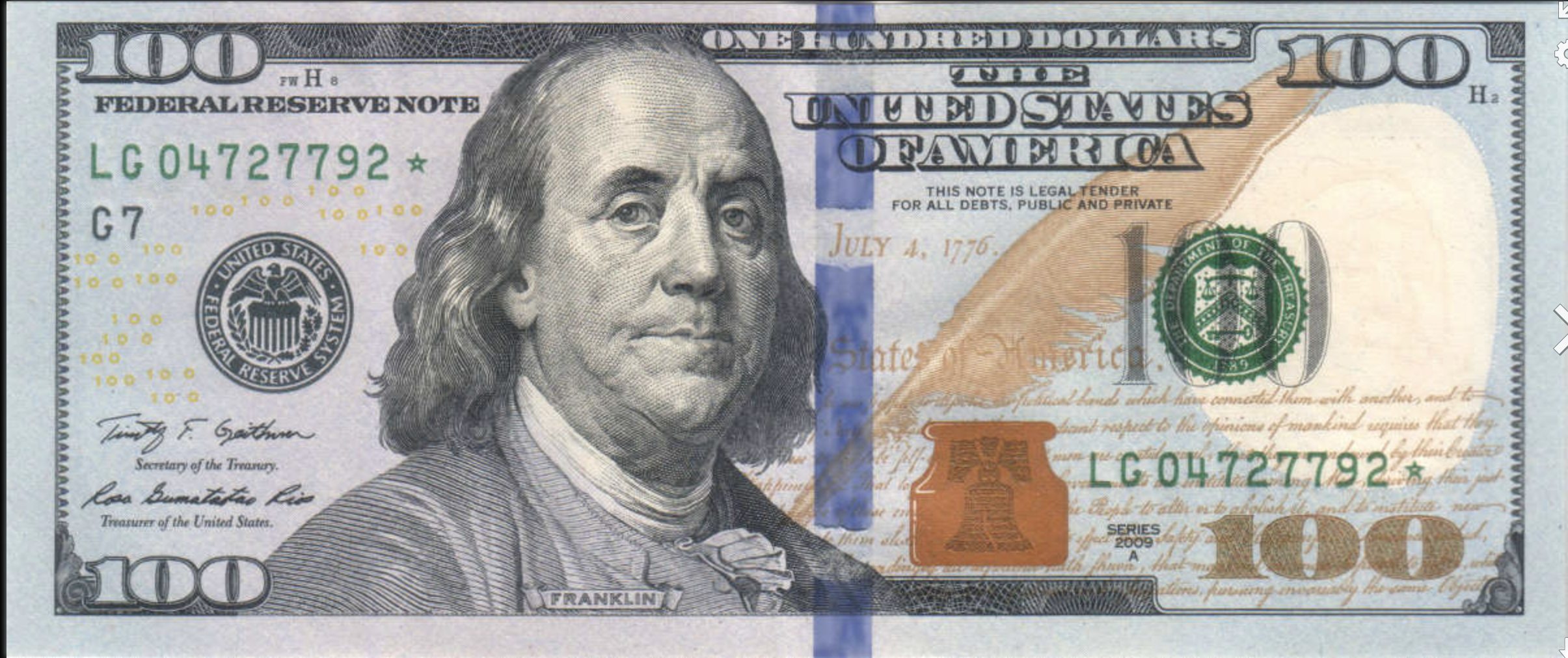
You can only get the blue rate by exchanging cash at “cuevas” (caves), which sounds dark, but really a “cueva” is just a place where someone exchanges at the blue rate: it can be a travel agent, a jewelry store or even a green grocer! The best rate is given for new bills of large denominations. In the case of the US dollar, you want to use 100 dollar bills with the blue band and the large image of Benjamin Franklin.
The next best thing to getting the blue rate is using a Visa or Mastercard (but not American Express) which gets a rate about 5% below the blue (and this rate is called the MEP). If you are here for more than a day, you will likely need some cash as Argentines typically use cash for many smaller purchases, for taxis and for tipping.
If you want to know where to go to exchange dollars or euros at the best rate, please contact me at BACityGuide@gmail.com
And if you are interested in learning about our tours, click this link.
2. USING CASH AND CREDIT CARDS – Credit cards are widely accepted in Buenos Aires, but not for everything. The economy is a cash / credit hybrid.
Tips are always in cash, except at a very few tourist oriented restaurants. Taxis are cash only. Smaller purchases at kiosks or green grocers are also in cash. Many non-tourist restaurants are cash only, and there are a lot of other restaurants that give a a 10-15% discount if you pay in cash.
If you use a foreign credit card, only use Mastercard and Visa as they give an exchange rate called the MEP, which is still a good deal as it is anywhere from 5 – 10% lower than the blue rate, and well above the official rate.
If you are here for more than a day, you will likely want to have some Argentine cash.
3. TIPPING CUSTOMS
Meals – the standard tip is 10% of the bill. Some restaurants that cater to tourists have started putting in a service fee, so if you see something like this you can ask if that is going to the waiters / waitresses, and if so you do not need to tip. This is not common practice, but you will find it in a lot of cafes and restaurants in Palermo in particular.
Cafés – if you are just having a coffee or a snack then 10% is fine, but even leaving 100 pesos as a gesture is always appreciated. Of course, no one will complain about getting a big tip! That said, courtesy is a highly valued commodity here. When a waiter or waitress comes to your table, saying “Buen día” or “Buenos días” with a cordial smile is enormously appreciated.
Taxis – people do not tip taxi drivers or car service drivers as a custom. If you are taking a taxicab, rounding up so the driver does not have to give you change is considered good form. If you are hiring a driver to take you around, a 10% tip always a nice bonus.
4. HEALTH AND SAFETY – should you any health related issues, health care in Argentine is high quality and much, much less expensive than in the U.S. You can go directly to the “Guardia” of a number of private hospitals and many doctors will speak at least enough English to attend to your needs. A few hospitals that are particularly good are Sanatorium Mater Dei, Hospital Alemán and Hospital Británico (British Hospital). The public hospitals are also high quality and very inexpensive, but often the waiting time is very long.
Pharmacies – if you have something minor and need medication, many pharmacies (farmacias) here will sell you medications that would require a prescription in the U.S.
Police – unfortunately are generally not well trained or particularly helpful. If something of yours gets stolen, the police will file a report, but it if very rare that they will find the person and return the stolen item. If you do need to report something stolen, even if just for insurance purposes, there is a Tourist Police station in the downtown that has bilingual officers. It is located at Avenida Corrientes 436 and the telephone number is +54 9 11 5050 3293.
5. TRADITIONAL EATING HOURS
While a lot of places do cater to the eating hours of foreigners, it is good to know the FOUR major mealtimes, and what Argentines eat.
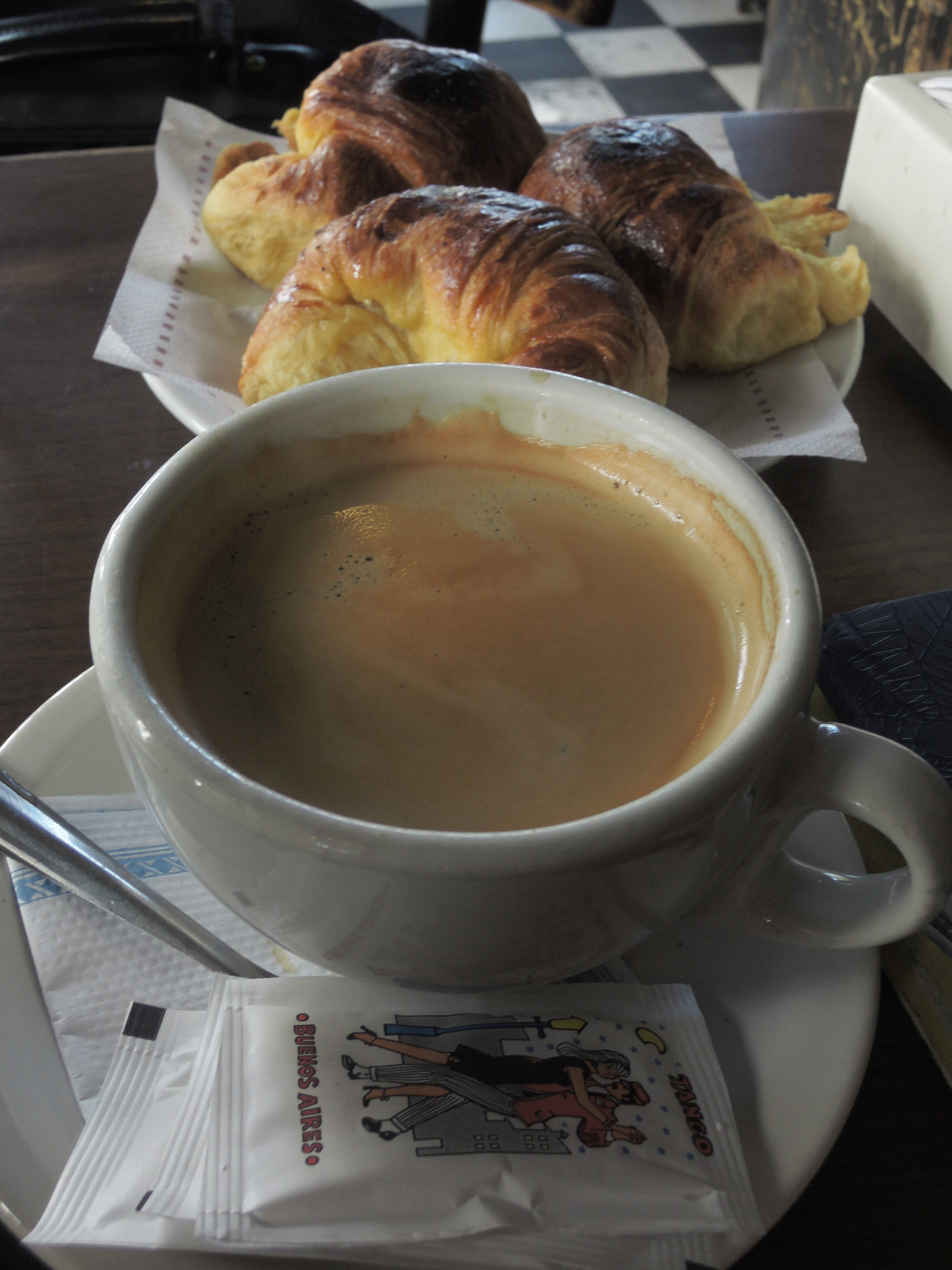
Breakfast is usually anywhere from 7 am to 10 am depending upon your job, and it is light! Often tea, coffee or yerba mate, with toast and jam or facturas (pastries). A lot of cafés where people typically have breakfast do not open before 8 am though, and some open as late as 9 am.
Lunch is between 1 pm and 3 pm, and many Argentines take a full hour lunch break. Though younger generations are eating lighter, and there are more and more vegetarians and vegans in the local population, a typical lunch is meat and fries or pasta, always with a small salad.
Merienda is the Argentine equivalent of tea or snack time, and is an essential meal! And depending upon your age and work situation it can be anywhere from 4 pm to 7 pm, and can be anything from milk with sweets to an orange juice with a sandwich to a beer with fries / chips. And this is how Argentines are able to hold out until 9pm for dinner.
Dinner is rarely eaten before 9pm, though some people may start as early as 8:30. In the hot summer months, most people won’t even consider eating before 10pm. If you go for dinner at 8pm, most locals will be showing up just as you are finishing your meal.
6. NEIGHBORHOODS FOR STAYING IN
There are basically five major neighborhoods that cater to tourists with hotels, Airbnb’s and hostels: Recoleta, Palermo, Puerto Madero, San Telmo and el Centro (the City Centre / Downtown).
Recoleta is the old money neighborhood of Buenos Aires and, yes, parts of it really do look like Paris. It includes some of the historic hotels such as the Alvear Palace and the Four Seasons and the Park Hyatt, as well as lots of beautiful boutique hotels. As you can imagine, this is not the place to stay on a budget, but its elegance is undeniable.
Palermo, since around 2003, has grown in prominence to become the chic / cool neighborhood. Its streets are lined with trees and fancy cafes and restaurants, with more of an urban, arty feel, and there are lots of hidden gem boutique hotels all over. It also holds two of the most famous parrillas popular with tourists (and many locals), La Cabrera and Don Julio, also some truly authentic places to eat that harken back to its pre-gentrification days such as: La Lechuza and Club Eros.
Puerto Madero is probably the most expensive and safest neighborhood in Buenos Aires. Built out from the city as a port at the end of the 19th Century, its security system of over 1,000 cameras, is run by the Argentine Coast Guard. Its hotel offerings include the Hilton, the Faena and the Alvear Icon. The former dyke system is bordered on both sides by cafes, restaurants and clubs.
San Telmo is the most bohemian of the major options and is the oldest part of the city. It has a very active arts community and is famous for the Sunday market that closes off the main street of Defensa for 12 blocks. The Old Market (el Viejo Mercado de San Telmo), built in 1897 as a wholesale market, is full of great places to eat and drink, and has lots of stalls with antiques and fun “old junk”. If you want to stay in this neighborhood, but want a more upscale hotel, there is the Anselmo Buenos Aires owned by Hilton!
El Centro offers a lot of great options for staying, but the neighborhood does tend to feel deserted at night and on the weekends. On the other hand, it is very convenient for getting around the city, and the nightlife of the theater district on Corrientes makes for great people watching as locals (porteños and porteñas) fill the cafés, pizzerias and ice creams parlors.
7. ARGENTINE BEEF – A FEW QUICK TIPS
The most famous steak houses – called parrillas for the name of the barbecue grill – in Buenos Aires are Don Julio, La Cabrera and La Brigada and these are all excellent with very high quality cuts of beef and in the same price range (expensive by Argentine standards, but cheap by US / European standards). That said, if you want the same quality but without the tourist treatment, I recommend Río Alba on Calle Cerviño.
Another less expensive option that has great quality and feels much more local is Parrilla Peña on Calle Rodriguez Peña.
Argentines, at least in Buenos Aires, tend to eat their steaks from medium rare to well cooked. If you like yours cooked less it is always best to order it on the rare side as they can always cook it more! The terms used here are “bien jugoso” for rare, “jugoso” for medium rare, “a punto” for medium, “pasado de punto” for medium well, and “bien cocido” for well done.
There are over two dozen Argentine cuts but the three most common are:
Bife de lomo – which is tenderloin / filet mignon, the most expensive and leanest cut.
Bife de chorizo – sirloin, which is a bit fattier than the bife de lomo and arguably the most popular cut, not to be confused with “chorizo” which is sausage.
Vacio – a flank cut with a layer of fat for a richer flavor.
8. WINE – if you are a wine lover, you are in the right country. Argentina has exploded over the last two decades as a producer of a great variety of excellent and very inexpensive wines.
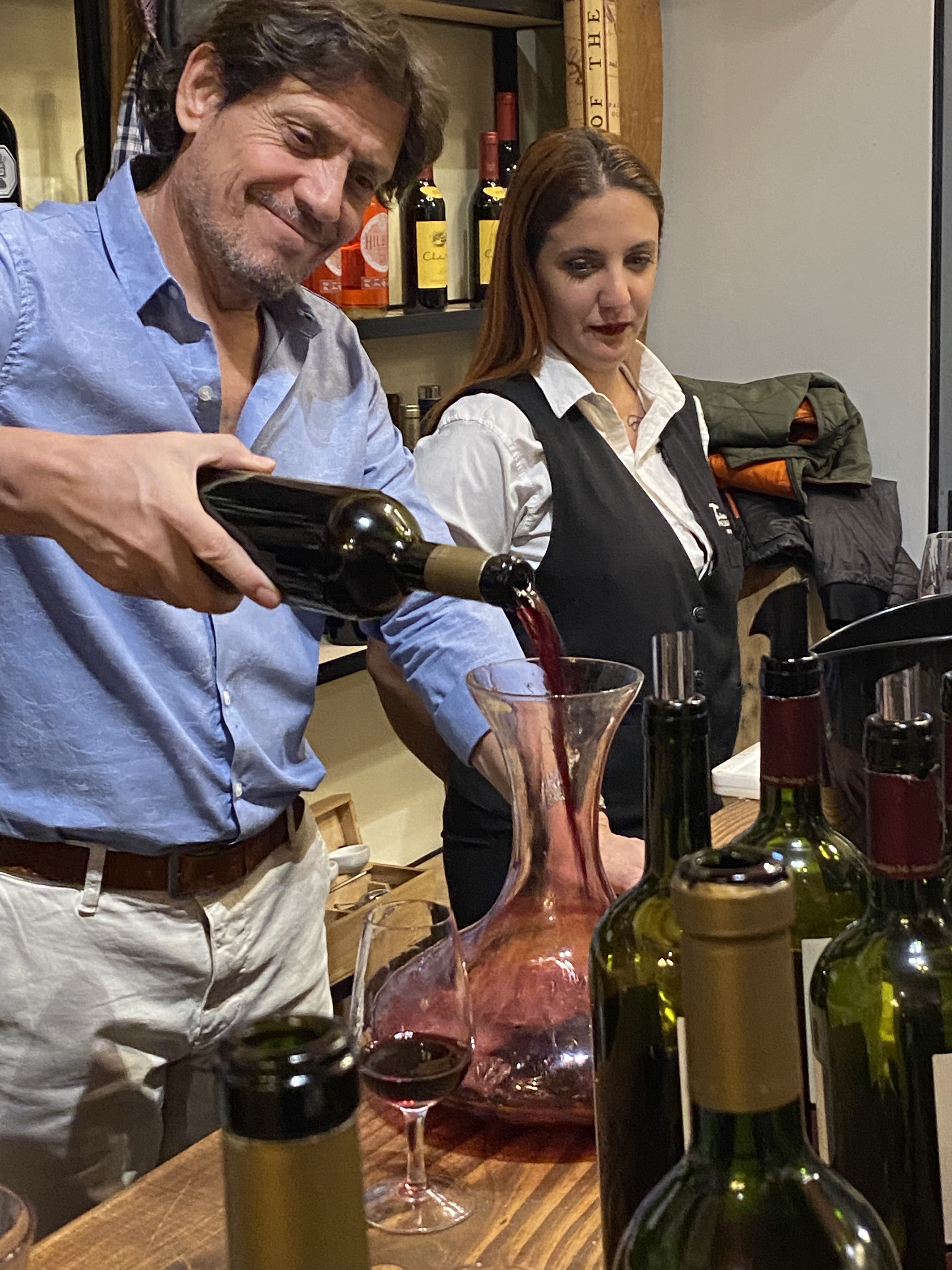
Malbec has, of course, established itself as the emblematic varietal, and while you are here I highly recommend trying Malbec from boutique wineries. Most Malbec is produced in Mendoza, but there is also a smaller production in Salta where, given the climactic conditions, the wine is often much more intense, and less balanced. If you like a strong wine, you may want to give it a try.
Salta is more famous for the production of Torrontes, the only varietal that is indigenous to Argentina. A cross of the criolla or chinche with the Muscat of Alexandria, this is a unique dry white wine, with a nose that is often described as peachy and floral.
If you like Pinto Noir, the production from Patagonia is really great: light and crisp.
Feel free to contact me if you are interested in tastings! Or places to enjoy wine by the glass.
And here is information on our private guided tours.
AND IF YOU HAVE ANY QUESTIONS ABOUT TRAVELING ARGENTINA AND BUENOS AIRES, PLEASE, DO NOT HESITATE TO CONTACT US. WE LOVE TO HELP.
 Buenos Aires Tour Guide